

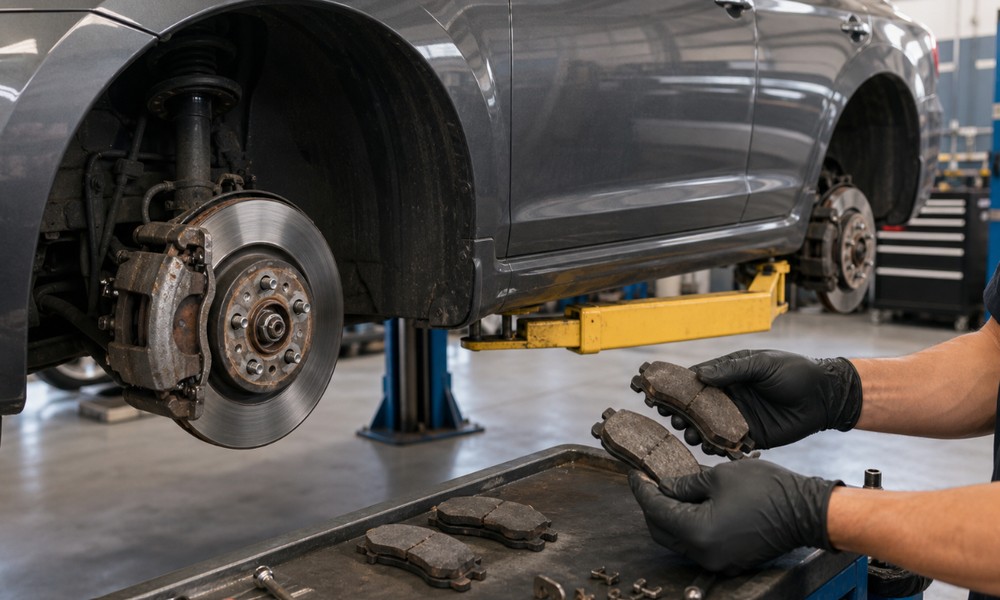
Most vehicles wear out the front brakes before the rear brakes. This is normal. The front brakes usually do more work when the vehicle slows down, especially during sudden stops, highway braking, or stop-and-go traffic.
Still, brake wear is not the same for every car. Some vehicles wear rear brakes faster because of design, driving habits, brake balance, or mechanical problems. Knowing the difference helps drivers understand what is normal and when something needs attention.
Why Front Brakes Usually Wear Faster
When you press the brake pedal, the vehicle’s weight shifts forward. This puts more load on the front wheels. Since the front tires have more grip during braking, the front brakes handle a larger share of the stopping force.
That is why front brake parts are often larger than rear brake parts. The front rotors and pads usually need to manage more heat and friction. More work means more wear.
In everyday driving, front brakes may wear faster because they help control most stops. This is especially true if you drive in heavy traffic, brake late, carry extra weight, or drive in hilly areas.
What Rear Brakes Do
Rear brakes still matter. They help stabilize the vehicle and support smooth stopping. They keep the back of the vehicle controlled so the car does not feel unstable under braking.
Rear brakes usually handle less force than front brakes, so they often last longer. But that does not mean they should be ignored. Worn rear brakes can affect stopping balance, parking brake function, and overall safety.
When Rear Brakes Wear Out First
Rear brakes can wear out first in some vehicles. This surprises many drivers, but it does happen.
Modern vehicles often use electronic brake force distribution, traction control, and stability control. These systems can apply rear braking in certain conditions to help keep the vehicle stable. Over time, that can increase rear brake wear.
Rear brakes may also wear faster if the parking brake is sticking or not releasing fully. A stuck caliper, seized slide pin, or brake hardware problem can keep the pads touching the rotor even when you are not braking. This creates extra heat and wears the pads quickly.
Driving style can also play a role. Light, frequent braking may cause rear brakes to work more than expected on some vehicles. City driving, steep driveways, and repeated low-speed stops can also affect wear patterns.
Signs Your Brakes Are Wearing Out
Brake wear does not always feel obvious right away. Watch for these warning signs:
Squeaking or grinding noise
Longer stopping distance
Vibration when braking
Brake pedal feels soft or low
Vehicle pulls to one side
Burning smell near a wheel
Brake warning light
Uneven brake dust on one wheel
If one wheel is much hotter than the others after normal driving, a brake part may be sticking.
Why Brake Inspections Matter
Brake pads, rotors, calipers, and brake fluid all work together. Replacing pads without checking the full system can miss the real problem. For example, new pads will wear quickly if the caliper is sticking or the rotor surface is uneven.
A brake inspection should check pad thickness, rotor condition, caliper movement, brake hoses, fluid condition, and parking brake operation. This helps explain why one axle or one wheel is wearing faster.
Should Front and Rear Brakes Be Replaced Together?
Not always. Front and rear brakes wear at different rates, so they do not always need replacement at the same time. It is common to replace front pads first and rear pads later.
However, both sides of the same axle should usually be replaced together. If the left front brake is worn out, the right front should be checked and usually serviced at the same time. This keeps braking balanced.
Final Thoughts
Front brakes usually wear out first because they handle more stopping force during braking. Rear brakes often last longer, but modern brake systems and mechanical issues can change that pattern.
The best approach is simple. Pay attention to brake symptoms, inspect the full brake system, and replace parts before they become unsafe. Balanced brakes help the vehicle stop smoothly, safely, and predictably.
This post was written by a professional at Tires2Go Florida. Tires2Go Florida is a trusted automotive service center located in Pinellas Park, Florida, serving drivers across St. Petersburg, Tampa, Clearwater, and Largo. Our certified mechanics handle tire and wheel replacement, brake service, suspension repairs, oil change Pinellas Park FL, wheel alignments, tire balancing, and road force balancing. We also specialize in ADAS calibration, suspension modifications, lift kits, and lowering kits using quality parts and modern diagnostic equipment. From routine maintenance to advanced automotive services, Tires2Go Florida provides dependable solutions and tires for sale for vehicles throughout the Tampa Bay area.